
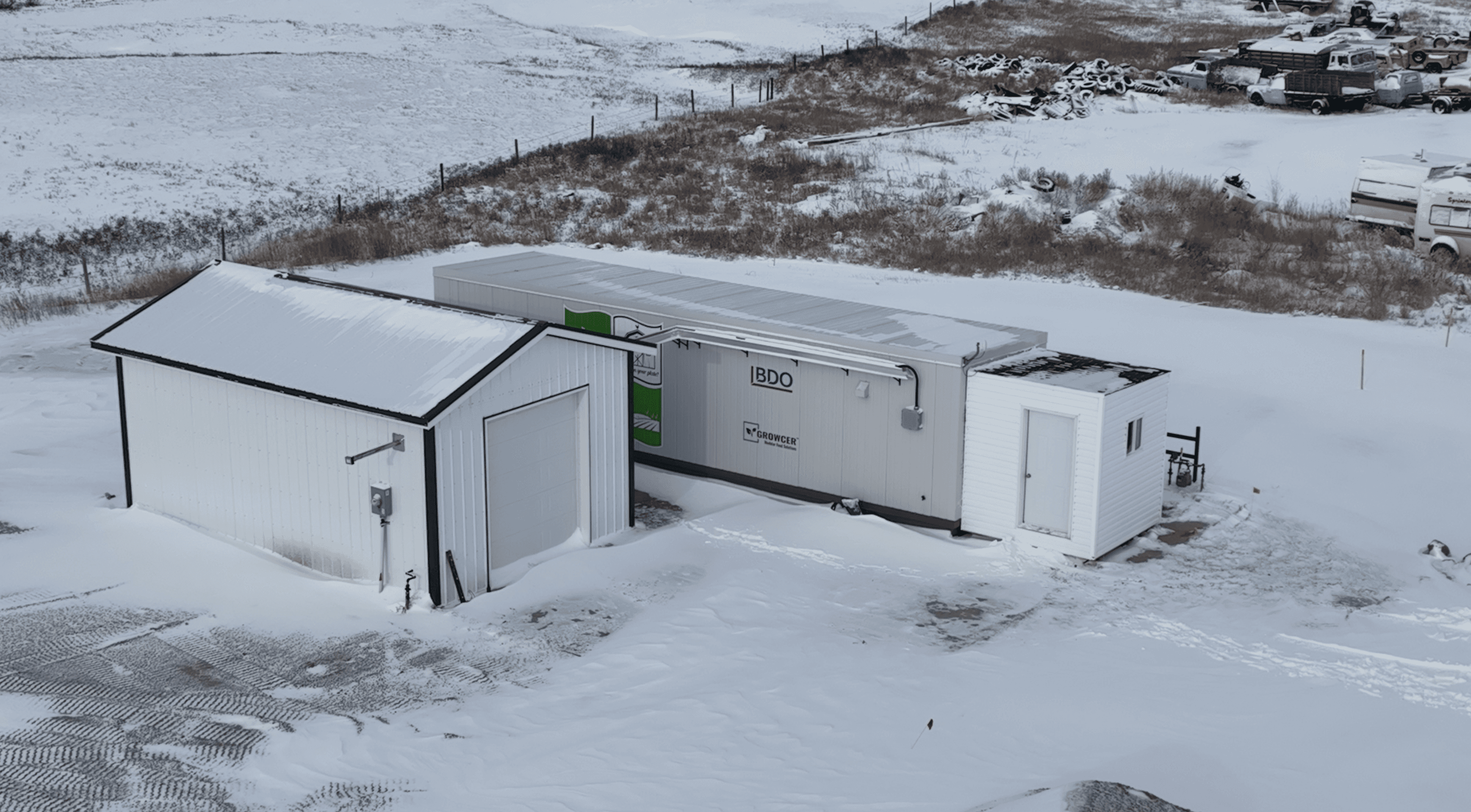
Hydroponic Food Security Model
Service:
Business Strategy
Client:
Hydroponic Food Security
Duration:
12 months
Date:
The Challenge
A remote-to-rural Indigenous community sought year-round access to affordable fresh produce and a practical path to food system resilience. The board’s real risk was governance failure: capital purchased without an operating model, unclear accountability for inventory and cash handling, and a project drifting into perpetual subsidy. Fresh produce was flown or trucked in year-round at significant cost, with near-zero local production capacity.
Our Approach
ICISI provided an end-to-end model treating the farm simultaneously as community infrastructure and an operating enterprise. Every deliverable was designed so that food outcomes were paired with enterprise controls.
Investment-ready business model, crop plan, channel strategy, pricing, staffing model, maintenance plan
Funding package aligned to eligibility constraints and stacking rules (Local Food Infrastructure Fund and related programs)
Implementation playbook, site readiness checklist, commissioning plan, food safety and QA routines
Controls and reporting cockpit, inventory, cash handling, POS/distribution logging, monthly board dashboard
Operator training program and standard operating procedures (SOPs)
The Results
10,000–15,000 lbs Annual fresh produce per unit | 400–600 heads/wk Weekly leafy greens output | 40–90% less Water use vs. soil farming |
Before & After KPIs
KPI | Before | After (Run-Rate) | Notes |
Local fresh produce production | Near-zero year-round | 10,000–15,000 lbs/year per unit | Align final number to measured harvest logs |
Weekly leafy greens output | N/A | 400–600 heads/week | ~500 heads/week is a verified benchmark for one container unit |
Water intensity (relative) | Baseline | 40–90% reduction | Depends on system design and recirculation rate |
Food miles exposure (greens) | High, all trucked/flown | Materially reduced | Quantify with freight receipts pre vs. post |
Local employment (FTE) | 0 roles | 1–2 core + seasonal/PT | Convert to FTE equivalents when publishing |
Funding & Cost Summary
Federal programming frames community food security initiatives with food production as central, but funds tied to eligible infrastructure and compliant project budgeting. Small-to-medium community food infrastructure projects commonly fall in the $100,000–$500,000 range. Agriculture and Agri-Food Canada’s Local Food Infrastructure Fund small-scale stream may fund up to $100,000 at up to 100% of eligible costs.
Cost Element | Typical Range (CAD) | Notes |
Container farm unit & core equipment | $200,000 – $320,000 | Vendor-specific; publish as range unless contract value is public |
Site works (pad, electrical, water, fencing) | $25,000 – $90,000 | Cold-weather resiliency can drive significant variance |
Mobilization, training & SOPs | $15,000 – $60,000 | May be eligible as professional services depending on program |
Launch inventory (seed, nutrients, packaging) | $5,000 – $25,000 | Often excluded from infrastructure-only grants |
Year 1 operating contingency | $15,000 – $60,000 | Risk buffer for labor gaps and early crop losses |
Implementation Timeline
The timeline follows a governance-first, then procurement, then operations sequence. It is modular so the same story works whether the project took 3 months or 6 months.
Phase | Activities |
Mobilize & Govern | Leadership decision + governance charter → Funding stack + approvals (Weeks 1–6) |
Build & Prepare | Site readiness (power, pad, water, security) + Procurement & logistics (Weeks 7–12) |
Launch & Stabilize | Install & commissioning → Operator training & SOPs → Pilot harvest, QA & reporting cockpit (Weeks 13–22) |
Risks & Mitigations
Risk | Mitigation | Owner |
Operator capacity / turnover | Cross-train ≥2 operators; simplify SOPs; weekly remote check-ins for first 90 days | Farm Operator Lead |
Energy cost volatility | Lock rate where possible; price/lb sensitivity as a board dashboard line item | CFO / Finance |
Governance drift | Charter single accountable owner; monthly KPI cadence; clear reinvestment rules | Steering Group |
Grant compliance risk | Maintain eligibility mapping and evidence folder from day one; align to program language | ICISI + Finance |
Testimonial
“Before this project, food security was something we talked about in meetings and worried about on the ground, but we did not have a practical operating model. What ICISI brought was a disciplined pathway from idea to operations. They translated a complex set of choices into clear board decisions, and then managed the details that usually sink projects: procurement, site readiness, staffing, and reporting.”
“Most importantly, the work created confidence. We can now see production volumes, costs, and community impact in one place, month by month. The approach respected our priorities while still treating the operation like a real enterprise. That combination has changed how we make decisions about future infrastructure projects.”